Risk Education That Supports Safer Decisions

19 Sep
Risk Education That Supports Safer Decisions
People living with explosive ordnance contamination may understand the danger and still have limited ability to avoid it. Livelihoods, movement, land use and access to services can all influence the risks people take.
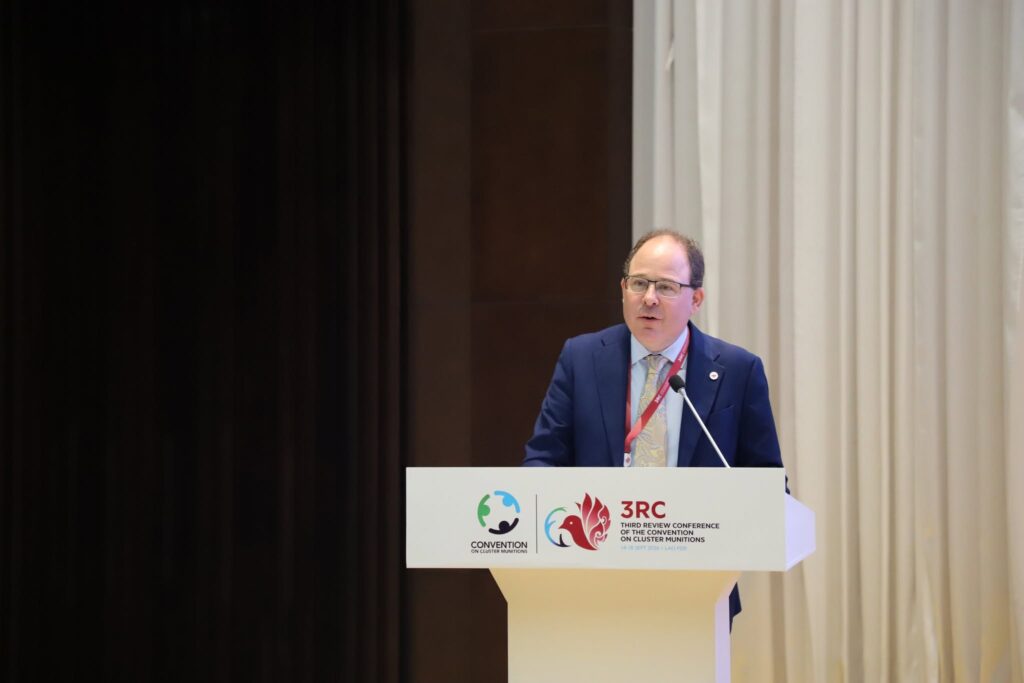
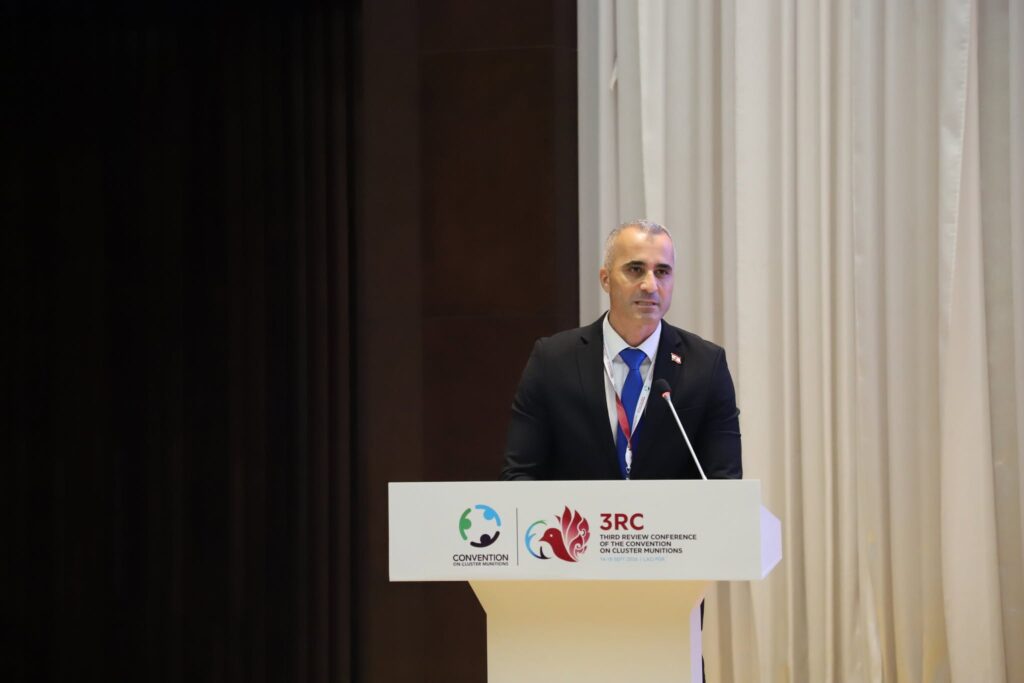
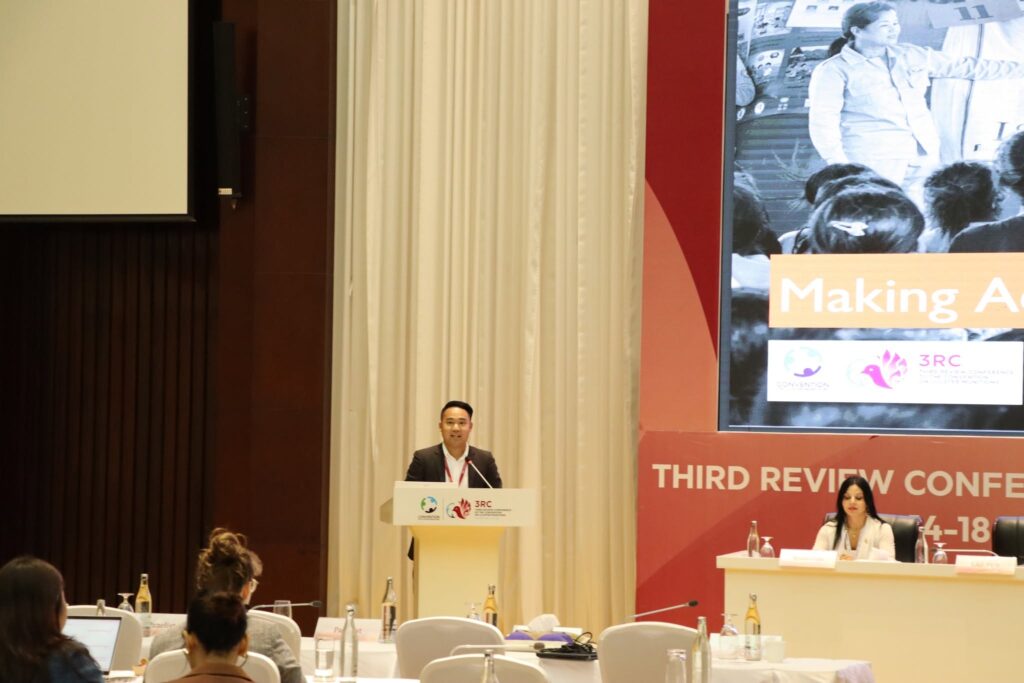
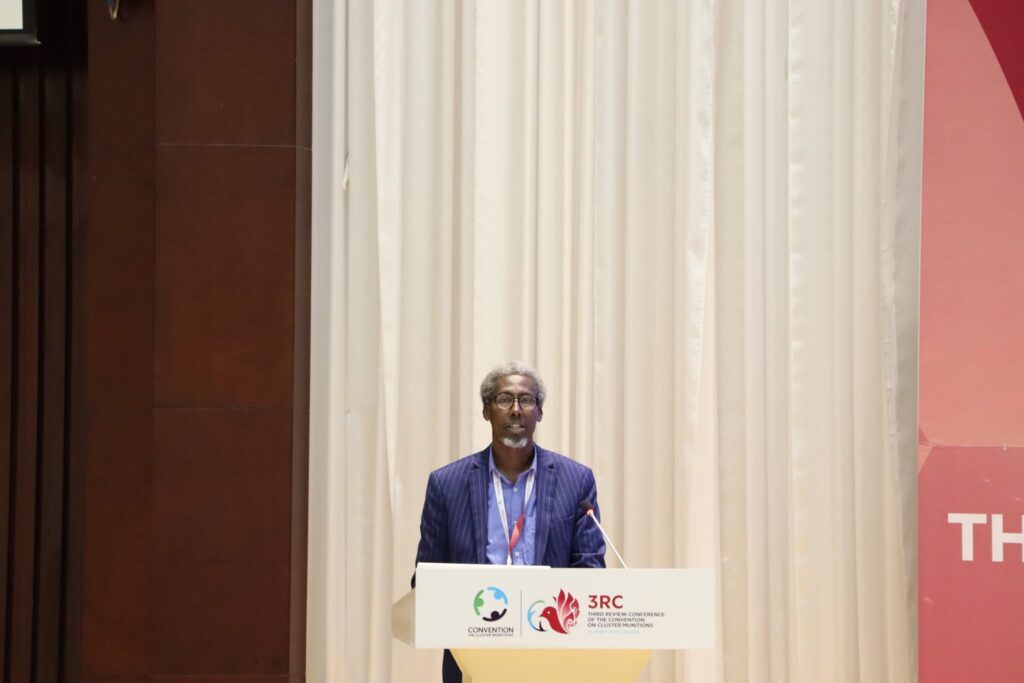
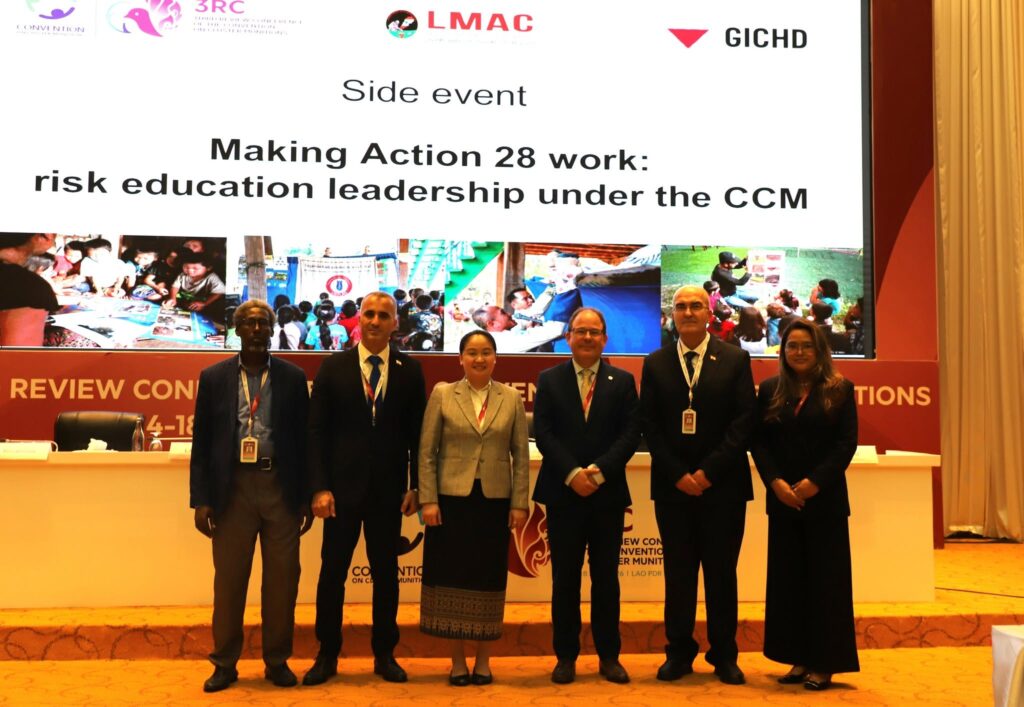
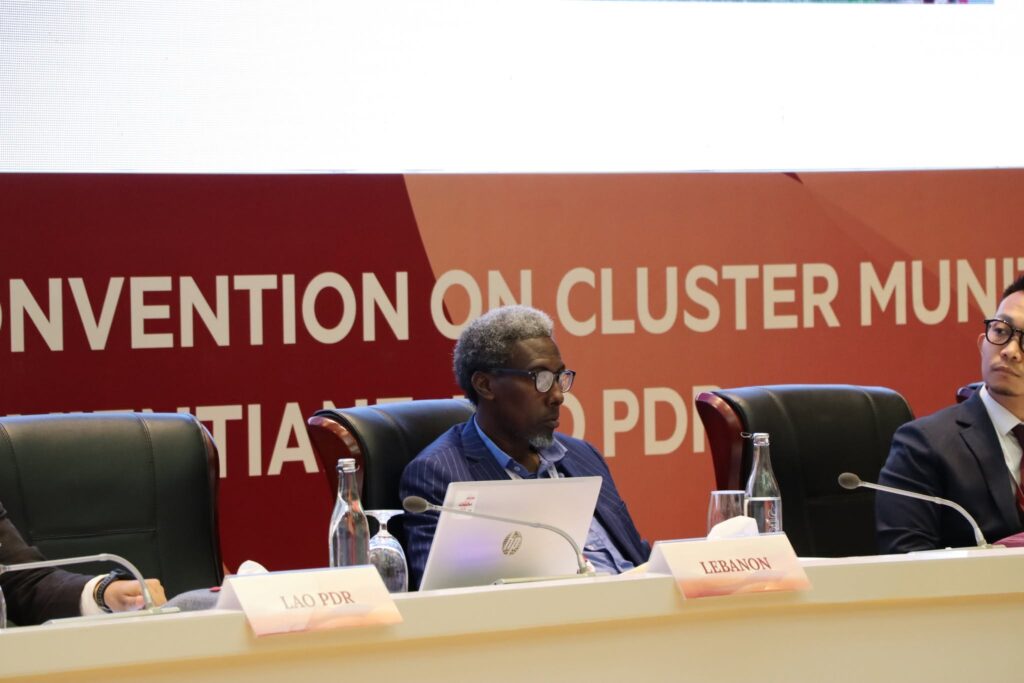
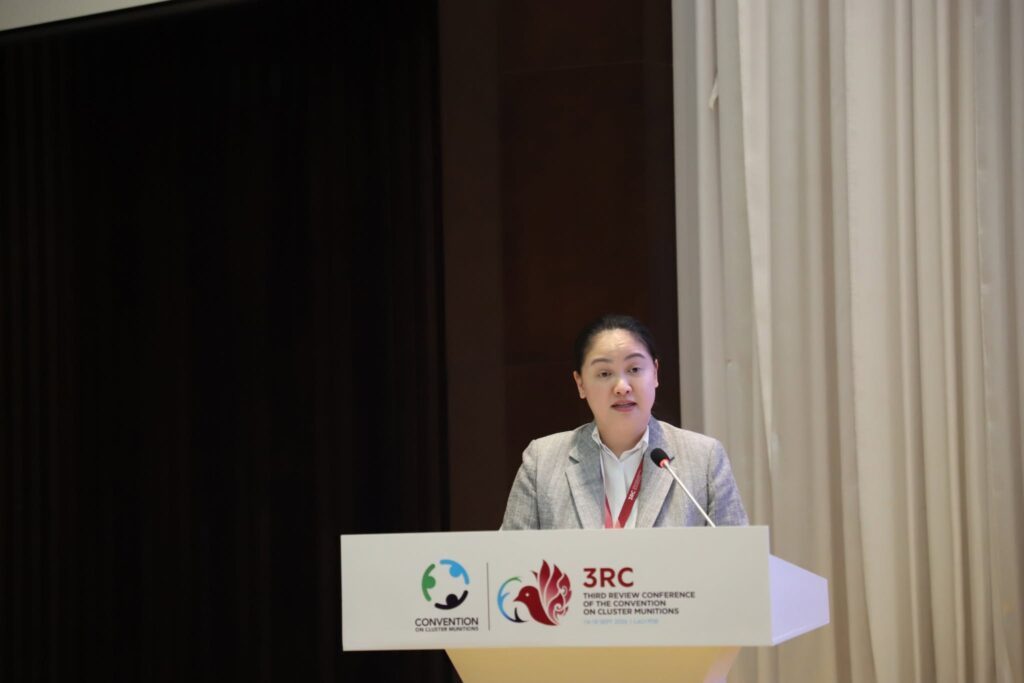
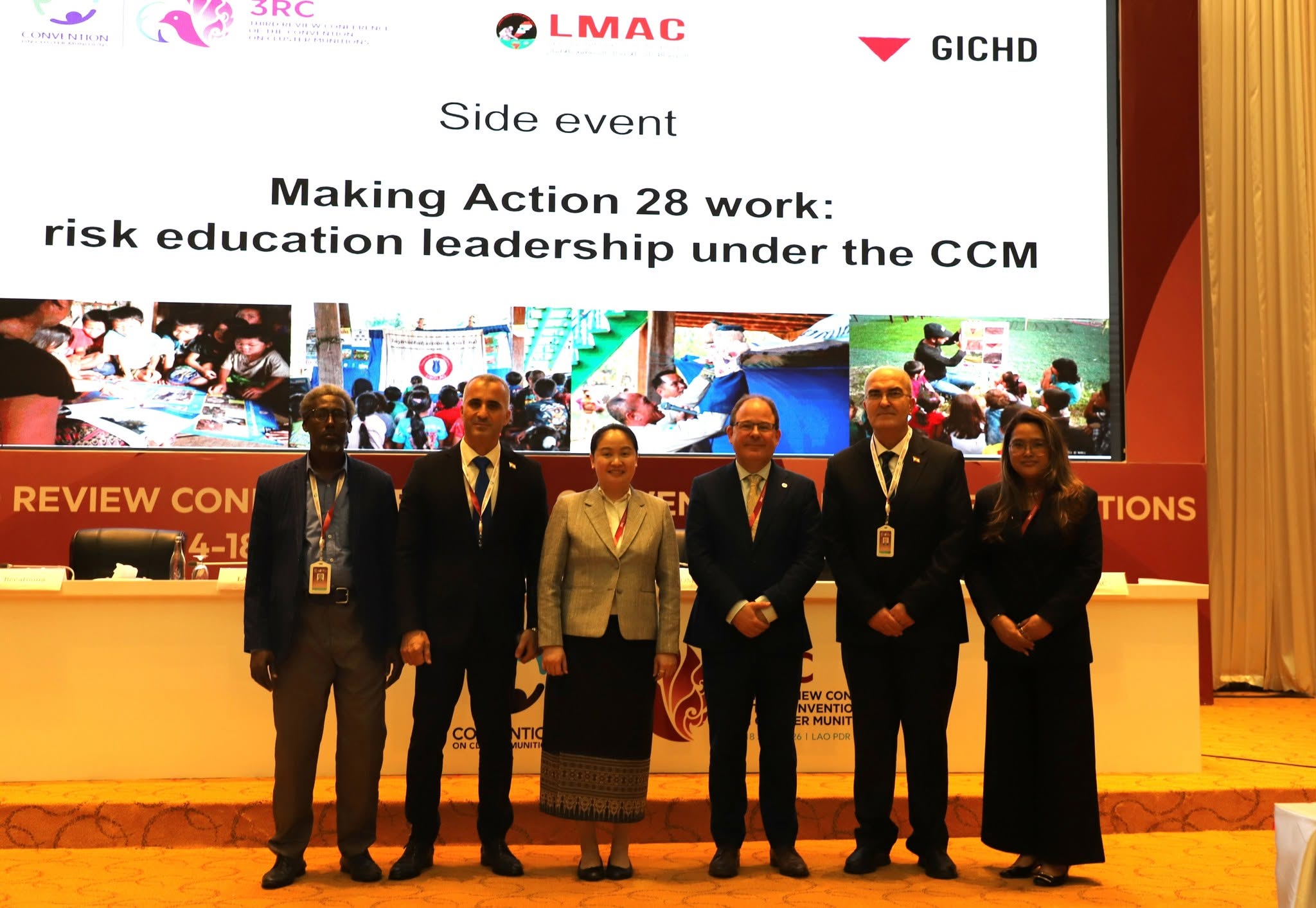
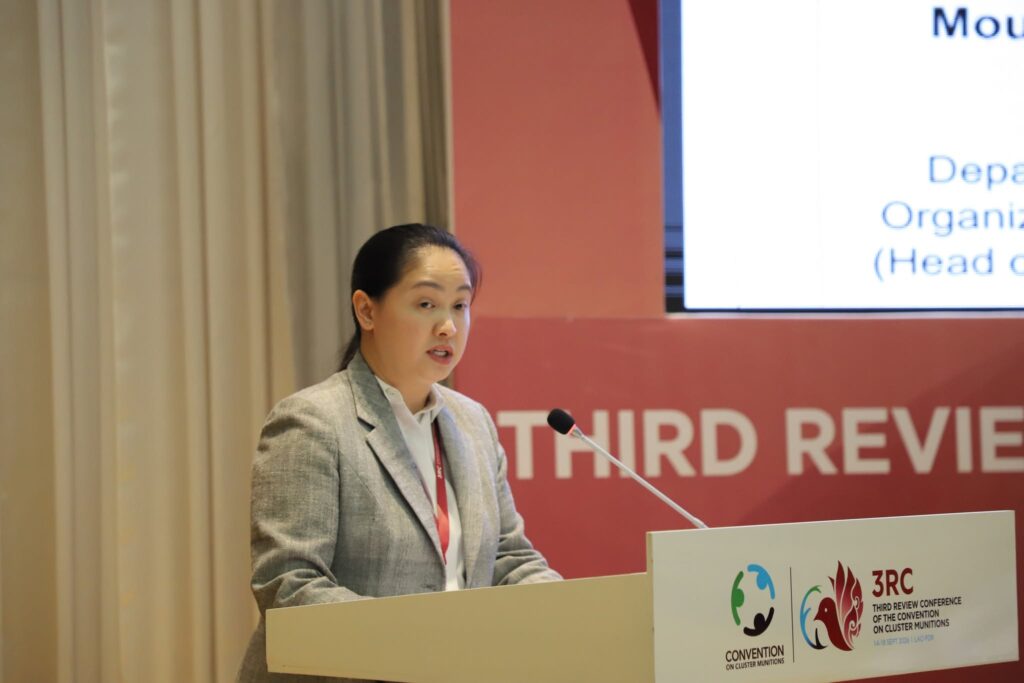
This reality gave urgency to the side event “Making Action 28 Work: Risk Education Leadership under the CCM,” organised by Lao PDR and Lebanon, in its role as the CCM Coordinator on Risk Education, with support from the Geneva International Centre for Humanitarian Demining Geneva International Centre for Humanitarian Demining – GICHD and the Convention on Cluster The Convention on Cluster Munitions Implementation Support Unit.
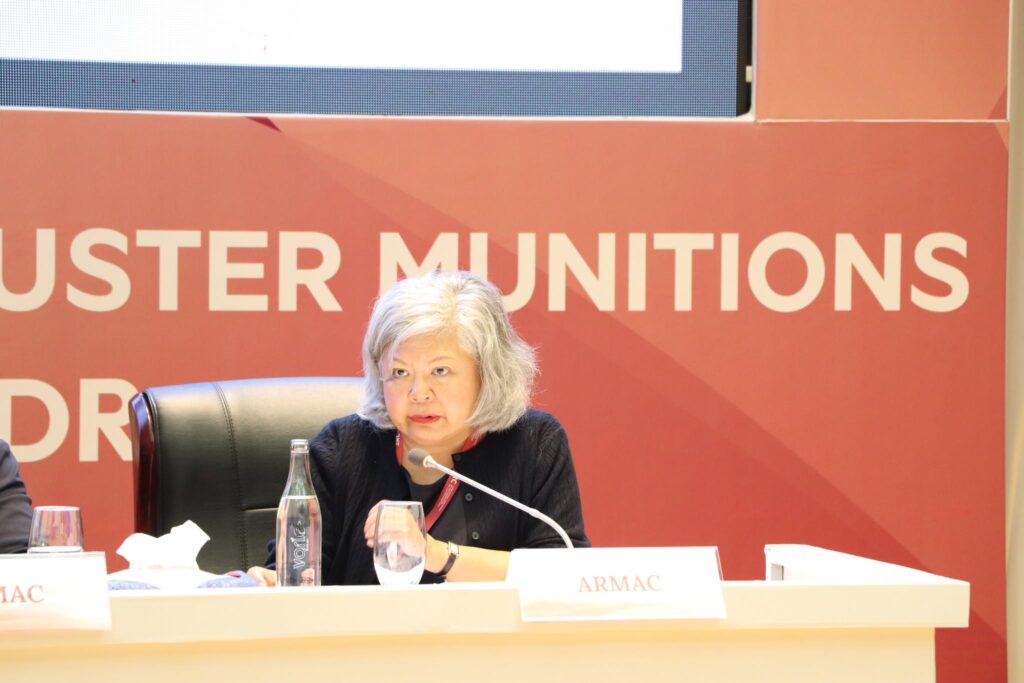
ARMAC contributed an ASEAN regional perspective on turning the commitments under Action 28 of the Vientiane Capital Action Plan into sustained national delivery.
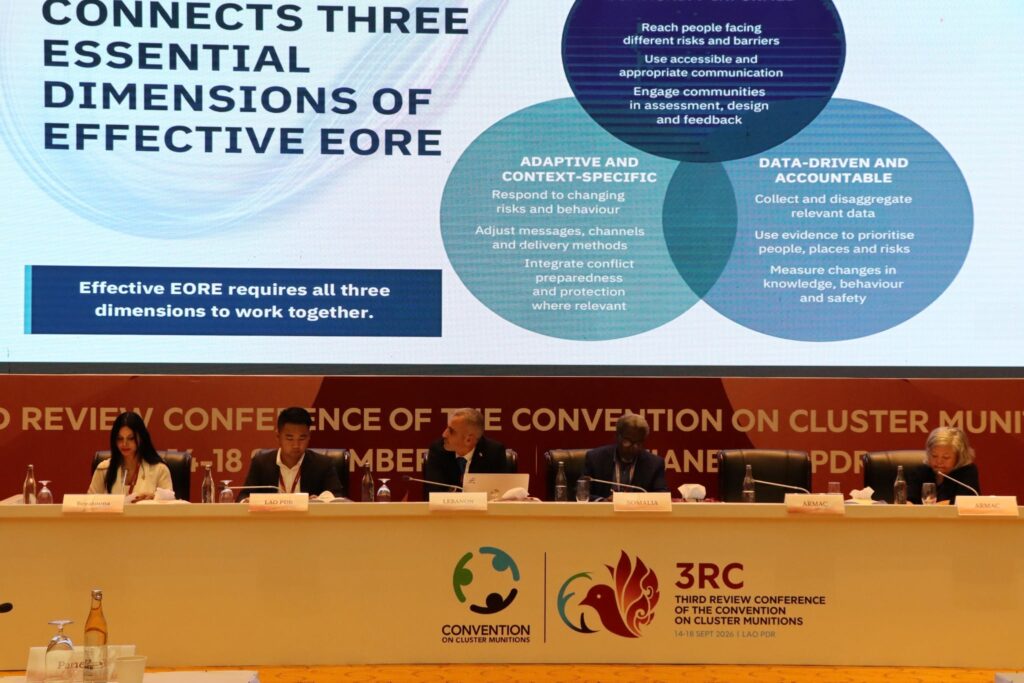
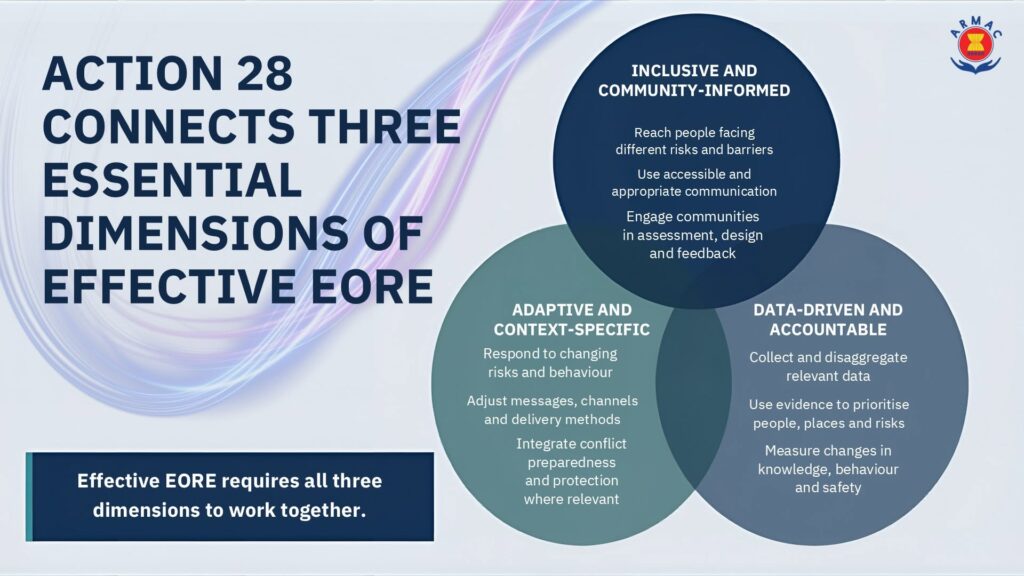
Action 28 connects three essential dimensions of effective explosive ordnance risk education:
Inclusive and community-informed approaches that respond to the different risks and barriers faced by affected people.
Adaptation of messages and delivery methods as contamination, behaviour and operating environments change.
Disaggregated data and evidence that help national authorities identify priority groups, target interventions and assess whether programmes support safer decisions.
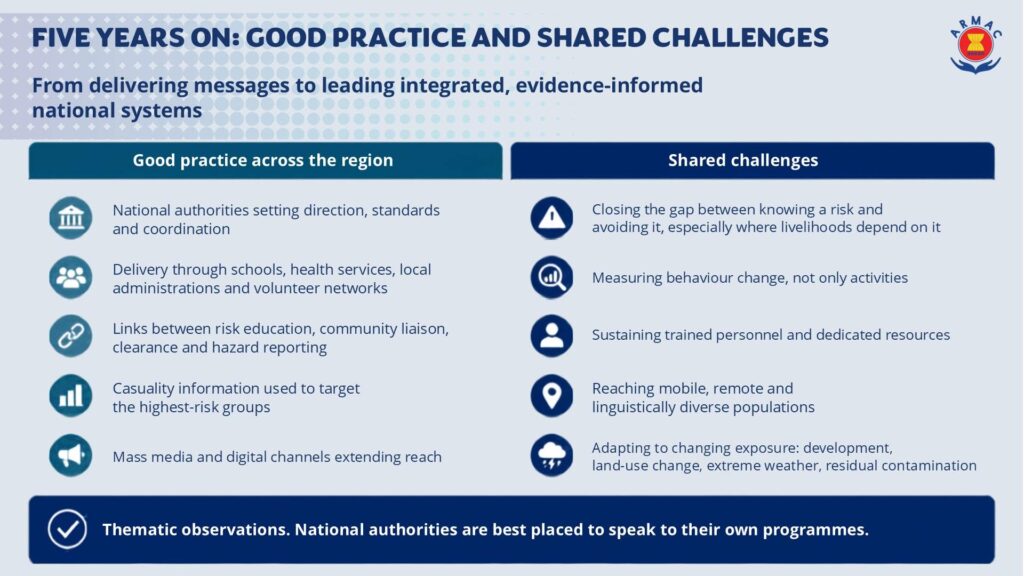
ARMAC shared how ASEAN Member States are gradually moving from delivering individual messages towards building integrated, evidence-informed national EORE systems. Good practice increasingly connects risk education with schools, health services, local administrations, community liaison, hazard reporting and clearance.
The discussion also highlighted a persistent challenge: awareness alone may not change behaviour when people face risks because of economic necessity. Effective EORE must therefore connect with livelihood realities, protection measures, development planning and clearance priorities.
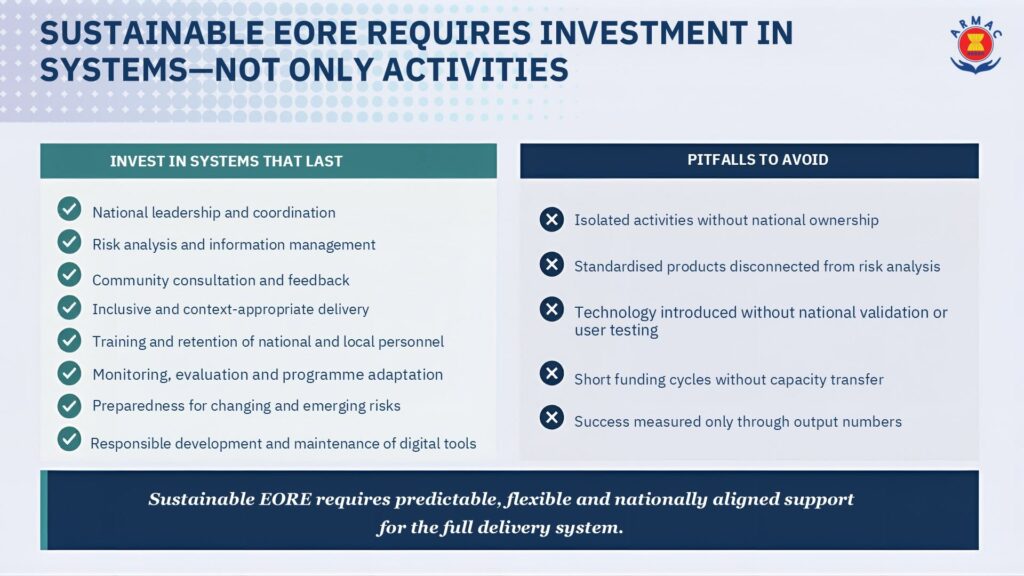
ARMAC also introduced the S.A.F.E. digital EORE concept as one example of responsible innovation that could complement national and community-based systems, subject to national validation, localisation, community testing, data protection and clear referral pathways.
The wider message was clear: sustainable EORE requires investment in national systems, trained personnel, community engagement, evidence and programme adaptation, not only individual activities or communication products.
Action 28 provides the framework. National authorities provide the leadership. Regional cooperation and sustainable partnerships can help turn shared learning into safer outcomes for affected communities.
© ARMAC 2023 . All rights reserved.